
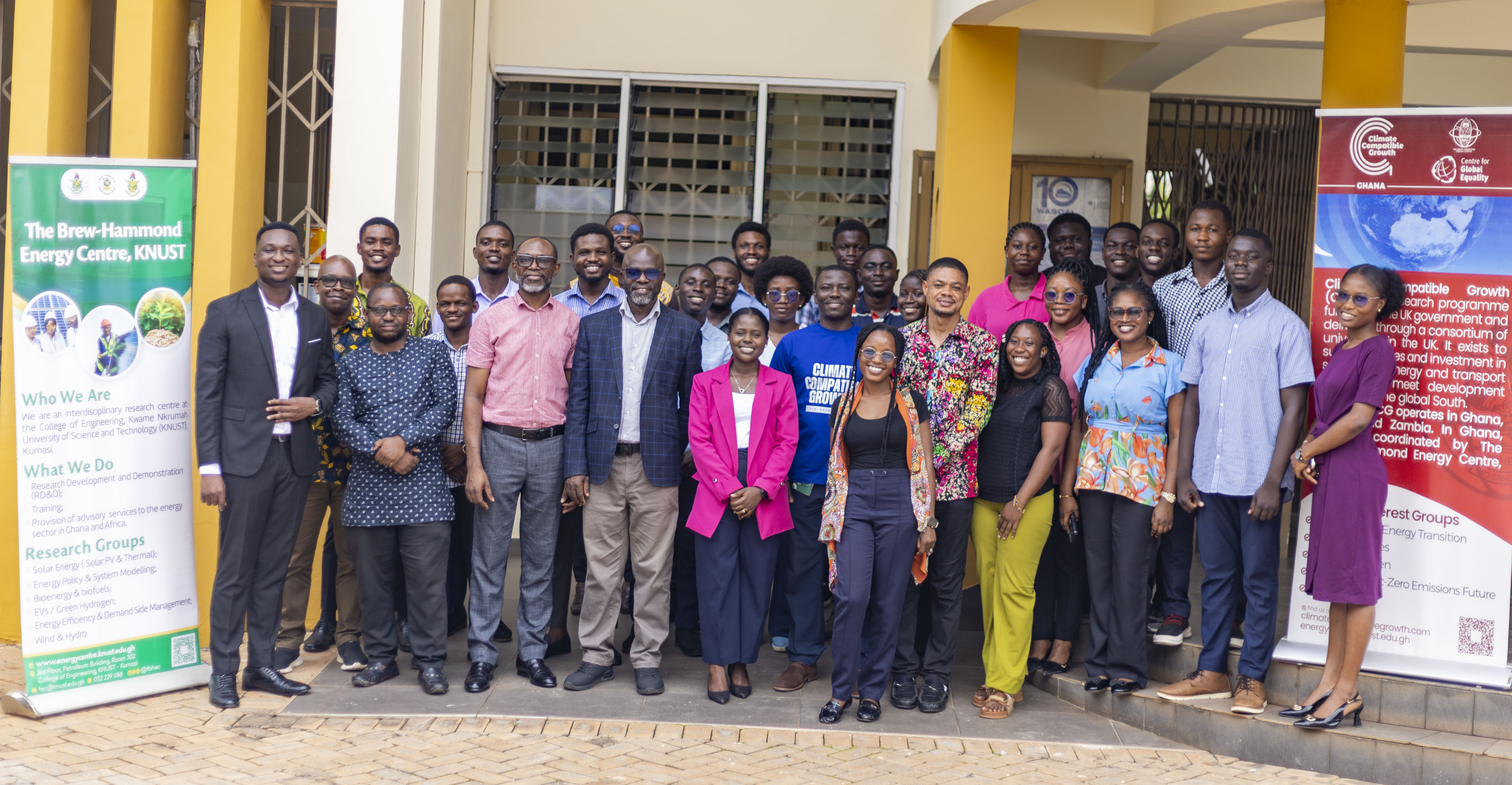
The Brew-Hammond Energy Centre at the Kwame Nkrumah University of Science and Technology (KNUST), Kumasi, in collaboration with the Climate Compatible Growth (CCG) Ghana Network, has trained students and researchers through a Climate, Land, Energy and Water Systems (CLEWS) capacity-building workshop aimed at strengthening systems modelling skills for energy and climate policy analysis.
The workshop introduced participants to the CLEWS framework, a modelling approach used to analyse the interconnections between climate, land use, water resources and energy systems to support informed policy decisions.
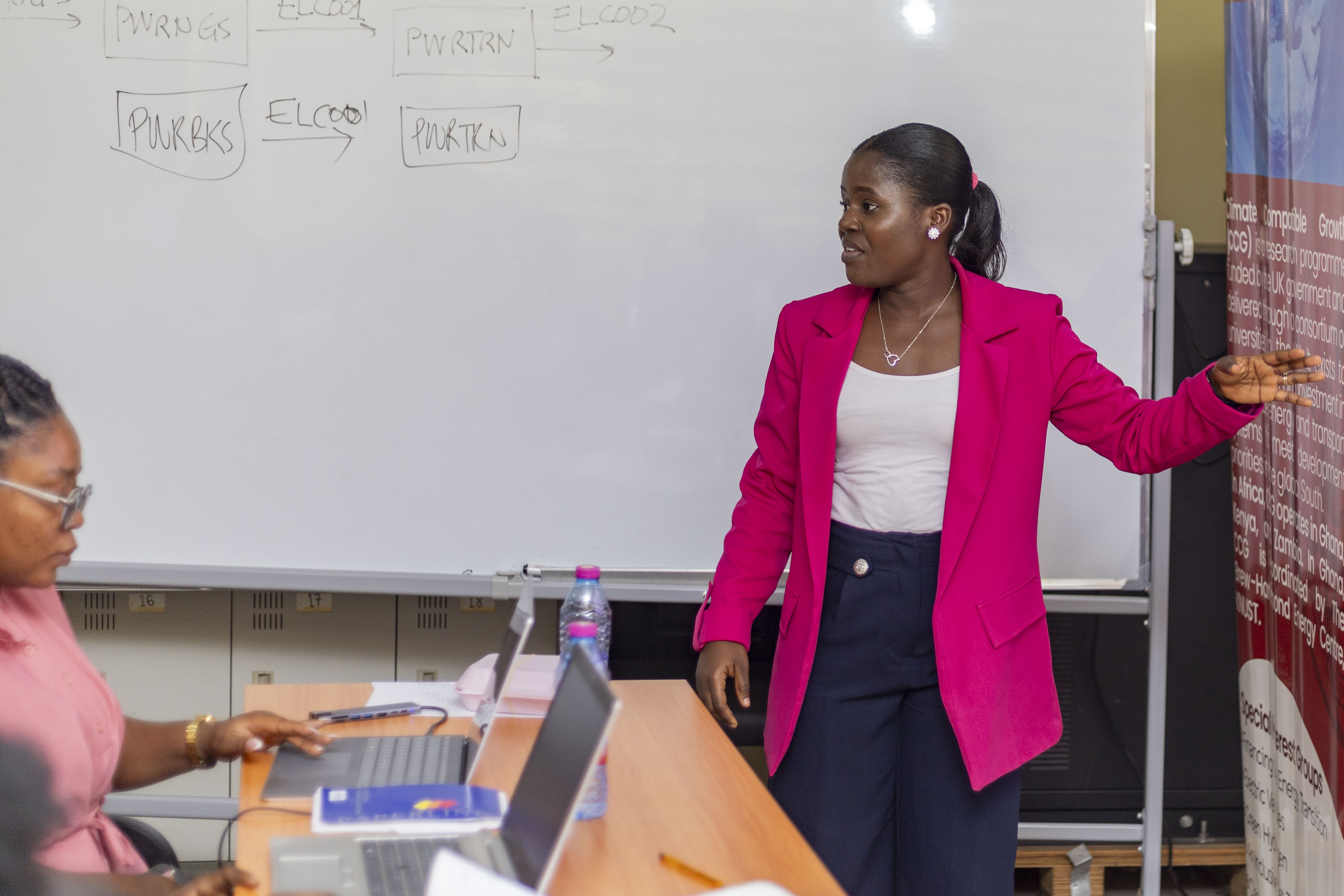
Dr. Ernestina Annan, IT Officer and Office Manager for the WASCAL Climate Change and Land Use (CCLU) programme at KNUST, explained that the training focused on helping participants understand the complex relationships between these sectors.
“The workshop is focused on understanding the interrelationship or linkages between climate, land use, water and energy,” she said.
According to her, these systems are closely connected and policy decisions in one sector often have implications for the others.
“The truth is that these systems have either advantages or synergies or trade-offs when it comes to how they are used. The idea is to use the CLEWS framework to see the implications of different policy decisions,” she explained.
Dr. Annan noted that the modelling framework helps researchers analyse scenarios such as expanding agricultural land, increasing natural gas power generation or producing more biofuels, and assess their impacts on emissions, water use and food production.
She added that the CLEWS approach allows researchers to simulate policy options and present evidence-based scenarios to decision makers.
“There will always be trade-offs and there will also be synergies. There is no scenario without trade-offs, so we select the option with the most manageable trade-offs and make informed decisions,” she noted.
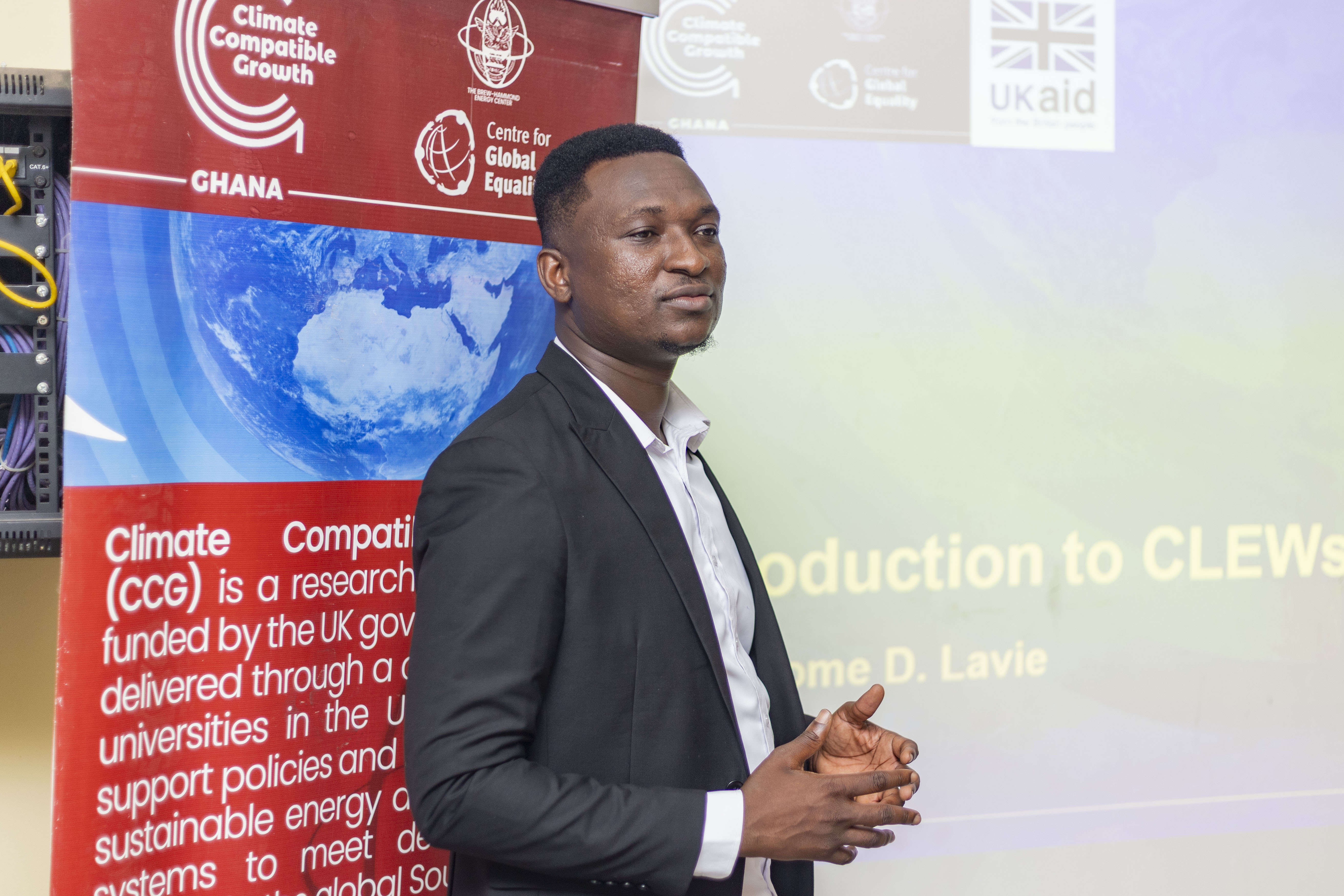
Dr. Jerome Lavie, a lecturer at the Department of Agricultural and Biosystems Engineering, explained that the workshop was inspired by a modelling training programme previously undertaken in South Africa.
He said the goal was to transfer the knowledge gained from that training to students at KNUST and begin building local capacity in systems modelling.
“The purpose was to look at how reducing emissions would have an impact on other factors in our energy mix and even the investment costs involved,” he explained.
He added that the long-term goal is to build a strong community of researchers capable of producing reliable data to guide national policy.
“We want to start a chain of research and build an army of modellers who can provide solid data to support policy directions, particularly in Ghana’s energy transition pathways,” he stated.
Mr. David Akuaku, a PhD candidate at the Department of Agricultural and Biosystems Engineering, emphasised the importance of understanding the links between climate, land, energy and water systems.
“The CLEWS framework consists of climate, land, energy and water systems that are linked together. These inputs affect each other, and that is why we study their interconnections,” he said.
He explained that agricultural activities such as irrigation demonstrate these linkages clearly.
“When you are growing crops and applying irrigation, you need water, but energy is also required to pump the water onto the field and these systems interact and influence each other,” he noted.
According to him, modelling these interactions helps researchers evaluate how different development choices affect emissions and sustainability.
“As we consider the transition from fossil fuels to cleaner energy, we must also consider emissions and how all these systems interact so that we can develop policies that benefit the country as a whole,” he added.
Participants at the workshop also highlighted the relevance of the training to their academic research.
Charitry Afia Antwiwaa Haleegoah, a first-year MPhil student in Mechanical Engineering Design and Manufacturing, said the training would help strengthen her research in energy systems.
“I am taking a course on energy conversion and utilisation, so when I saw the flyer about CLEWS, I wanted to learn more about the model used for analysing climate, land, energy and water systems,” she said.
She explained that learning the modelling framework would enable her to apply predictive analysis in her research.
“Learning this CLEWS model will give me the opportunity to predict future data and analyse current or past data to support my research work on land, energy and water,” she said.
By: Abena Serwaa Gyamfi


